


Ending a marriage is never easy, but doing it in a foreign country with a different legal system and language can feel overwhelming. Whether you are facing a mutual separation or a contentious court battle, understanding Thai divorce law is crucial to protecting your assets, your visa status, and your relationship with your children.
A common question we receive is: "Can I just sign a paper at the district office, or do I need to go to court?"
The answer depends entirely on whether you and your spouse can agree on everything—money, kids, and property. This guide breaks down the two distinct paths to divorce in Thailand, the "Sin Somros" asset rules, and the specific hurdles foreign nationals face in 2025.
Why You Can Trust Us
At Thai Investment Visa, we facilitate the lives of global citizens in Thailand. While our core business is residency and investment, we inevitably assist clients through life transitions, including marriage dissolution. We work closely with the Family Court specialists and top-tier litigation firms listed in this guide. We have seen the devastating financial impact of poorly managed divorces and the relief of those who prepared correctly. The information below is based on the Civil and Commercial Code and the Act on Conflict of Laws, verified for 2025.
The Two Paths: Uncontested vs. Contested
Thailand offers two very different ways to end a marriage. One costs less than a nice dinner; the other can cost a fortune.
1. Uncontested Divorce (Administrative Divorce)
This is the "easy" way, available only if both parties agree to end the marriage and agree on all terms (custody and assets).
- Where: You go to the local District Office (Amphur or Khet), not a court.
- Process: Both spouses must be physically present. You sign a divorce agreement in front of the registrar and two witnesses.
- Cost: The government fee is roughly 50 THB (less than $2).
- The Catch: This is only legally recognized for marriages registered in Thailand. If you married in the US or UK, an administrative divorce at the Amphur may not be recognized by your home country.
2. Contested Divorce (Judicial Divorce)
If one party refuses to divorce, or if you cannot agree on who gets the house or the kids, you must go to the Family Court.
- Grounds Required: You cannot just say "irreconcilable differences." You must prove one of the specific grounds listed in Section 1516 of the Civil and Commercial Code.
- Timeframe: A court case typically takes 6–12 months, or longer with appeals.
- Outcome: A judge will decide the division of assets and custody based on Thai law.
Grounds for Divorce (Section 1516)
To file a lawsuit, you must prove one of the following occurred:
- Adultery: Your spouse has "given maintenance to or honored another person as wife or husband."
- Misconduct: Your spouse committed a crime or behaved in a way that causes you "severe shame" or "insult."
- Desertion: Your spouse has deserted you for more than 1 year.
- Separation: You have lived separately for more than 3 years (voluntarily or by court order).
- Bodily Harm: Your spouse physically or mentally tortured you.
- Insanity: Your spouse has been adjudged insane for more than 3 years with no hope of cure.
- Lack of Support: Failure to provide maintenance or support proper to your station in life.
Who Gets What? (Sin Somros vs. Sin Suan Tua)
Thailand is a "Community Property" jurisdiction. Assets are split into two baskets.
1. Sin Suan Tua (Personal Property)
This is what you keep 100%. It includes:
- Assets you owned before the marriage.
- Assets you inherited or received as a personal gift during the marriage.
- "Tools of the trade" necessary for your profession.
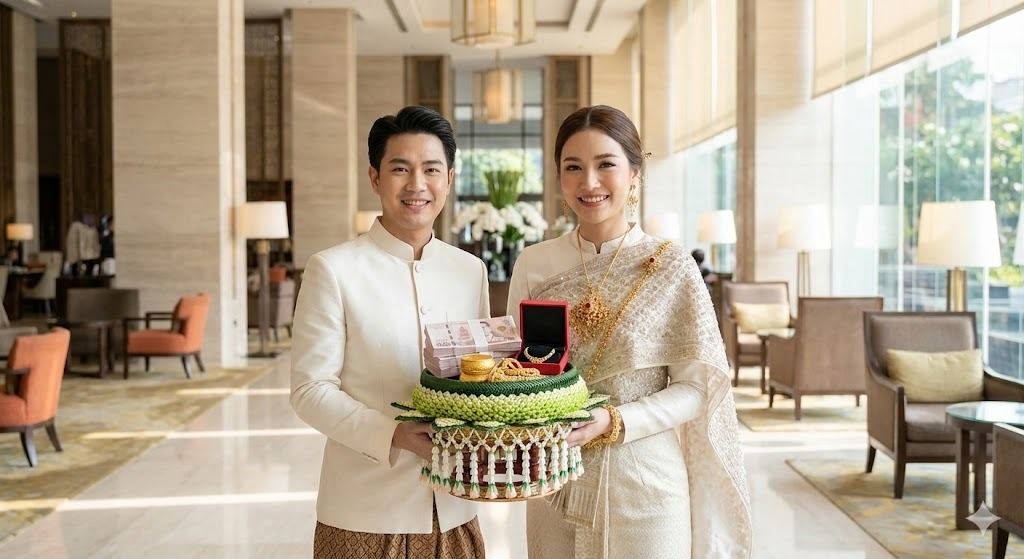
- The "Khong Man" (engagement gifts).
2. Sin Somros (Marital Property)
This is generally split 50/50. It includes:
- Everything acquired during the marriage (salary, bonuses, property bought).
- Fruits of Personal Property: If you owned a condo before marriage (Personal), but you rented it out during the marriage, the rent money is Marital Property.
Tip: If you bought a house in your Thai spouse's name using your personal funds, the court may try to divide it, but proving the source of funds is difficult without a clear paper trail or a prenuptial agreement.
Child Custody: The "Power of the Parent"
Custody battles in Thailand focus on "Parental Power."
- Unmarried Fathers: By default, the mother has sole custody. The biological father has zero rights unless he legitimizes the child through the court or registration at the Amphur.
- Married Parents: Both have joint parental power. In a divorce, the court decides based on the "best interests of the child."
- Foreign Fathers: Thai courts are generally fair and do not automatically favor the Thai mother. However, if the mother has been the primary caregiver and the child speaks only Thai, the court is unlikely to grant sole custody to a foreign father who intends to move the child abroad.
International Divorce: The Conflict of Laws
If you are a mixed-nationality couple, the Conflict of Laws Act applies.
- Section 26: A divorce by mutual consent is valid only if the laws of both spouses' nationalities permit it.
- Section 27: A Thai court cannot grant a divorce unless the grounds are recognized by the law of the husband's nationality (or common nationality).
Warning: Some countries (like the Philippines) do not allow divorce. If a Filipino marries a Thai, obtaining a divorce in Thailand can be legally complex.
Top Family Law Firms in Thailand
Divorce is high-stakes litigation. You need a firm that understands both Thai family law and the international implications for your assets abroad.
Company NameSpecialtyLocationContactSiam Legal InternationalFamily Law, Contested DivorceBangkok (Asoke)www.siam-legal.comChaninat & LeedsUS-Thai Divorce, CustodyBangkok (Sukhumvit 13)www.thailand-lawyer.comJuslaws & ConsultInternational Family LawBangkok / Phuketwww.juslaws.comIsaan LawyersUK-Thai Divorce, Expats in NEKorat (Nakhon Ratchasima)www.isaanlawyers.comBangkok Family LawyerMediation, SettlementBangkok (Sathorn)www.bangkokfamilylawyer.com
Export to Sheets
Contact Information for Legal Assistance
- Siam Legal International
- Phone: +66 2 254 8900
- Address: Interchange 21 Building, Sukhumvit Road, Bangkok.
- Why them: They have a dedicated family law division with English-speaking litigators who handle hundreds of expat divorces annually.
- Chaninat & Leeds
- Phone: +66 2 168 7001
- Address: Trendy Office Building, 18th Floor, Sukhumvit Soi 13, Bangkok.
- Why them: Managed by a US attorney, they are excellent for cases involving assets in both the US and Thailand.
- Isaan Lawyers
- Phone: +66 83 342 6668
- Address: 992/35 Mittraphap Road, Nai Mueang, Nakhon Ratchasima.
- Why them: The go-to firm for the thousands of expats living in Isaan; very experienced with rural property disputes.
Frequently Asked Questions
- Does a prenup work in Thailand? Yes, but it must be registered at the time of marriage. You cannot sign a valid prenup after you are married (a post-nup is usually void). The prenup must be attached to the marriage certificate at the Amphur.
- Will I get deported if I divorce? If you are on a "Non-O Visa" based on marriage, your visa is technically cancelled the moment the divorce is finalized. You usually have 7 days to leave the country or switch to a different visa category (like Work, Retirement, or LTR).
- Can I sue for the return of the dowry (Sin Sod)? Generally, no. Sin Sod is considered a gift given before marriage. Unless there was a specific written agreement that it would be returned in case of divorce (which is rare), it is usually kept by the wife's family.
- How much is alimony in Thailand? Alimony (Living Allowances) is not automatic. It is granted only if the divorce grounds show that one party is at fault and the other party is left destitute. It is usually much lower than in Western countries.
- Can my wife sell the house without my consent? If the house is "Sin Somros" (Marital Property), she needs your written consent to sell it, even if your name is not on the title deed. However, if she falsely declared it as "Sin Suan Tua" (Personal Property) when buying it, she might try to sell it. You need a lawyer to file an injunction immediately.
References
- Department of Provincial Administration - Marriage and Divorce Registration
- Civil and Commercial Code - Family Law Section
- Siam Legal International - Divorce in Thailand Guide
- US Embassy Bangkok - Divorce Procedures for Americans
- Thailand Law Online - Sin Somros vs Sin Suan Tua